
Building products is easy, building products that fit the market need, not so easy. Founders start with a great idea, maybe with a ready prototype, but it is a long road from there to the market success.
Product Manager (PM) can help you build path to the commercial success. They will take on researching the market, talking to the users or prospective customers to understand their needs. These discussions frequently go in many directions, as the users open up about their problems and needs. A skilled PM can quickly filter out the valuable information from a discussion. I have been involved in many face-to-face user discussions. Not infrequently, the meetings that were scheduled with sales for 15 minutes, ended up being an hour long when I was there. It was not because I talked, it was the customer talking for most part of it. I only nudged the discussion to keep it focused but did very little talking. These valuable interviews gave me a lot of material on what is required by the end users and how they see the product working for them.
Obviously, you do a lot of such interviews to avoid being biased. The key information to get out of such interviews, in an early stage company, is to understand clearly how the product will fit with the user. Whoever invented the product in the first place has an idea, they may have validated it with some interviews and done solid discovery work. But this would be focused on a small piece of the market. The global success is build with taking the discussions to larger group of people, hopefully across different customer segments and geographies. Why?
Each user will have slighly different needs, workflows or even ability to implement your product. Uncovering the drivers behind their needs and limitations is very important. Humans tend to be averse to changes. Diagnostic labs are not different. But the reason for that is different, they must do a lot of work if the changes to their workflows are significant. These will be:
- new validation/s
- costs
- time
- need for samples
- and the list goes on.
I worked with clinical labs as they were preparing for inspection, re-certification and new test validation. Sometimes just helping with the data and information they needed, sometimes running through new workflows with them while they were frantically getting ready. It all taught me one thing – listen to the user, let them tell you what they need.
Selling a new product to a diagnostic lab is not simple. They may want it, they may love it, see the need for it but then logistics, quality, manpower, space, budget come into play and the deal take a long time to close. By working with the internal company teams a PM can help position the product to make it easier to sell. In some cases my own customers pointed out the benefits of the products we as a company did not think about. So having this internal product voice is important.
Coming back to why startups need to take product management seriously is that there is a lot to analyze, prioritize, clarify for the users, for the market. Founders may not have time, sales team may be out of their comfort zone and technical team is great with technology but not how to position this for the user/s. All these people bring in their expertise to the analysis but someone needs to drive it and own it. And it should be a product manager, they can put all this together and showcase why and what is important in the product for the user and market. If the users see the product as something they want and need, you have an advantage. Now you need to be clear what it will take for them to adopt it. The time to market is important, especially for a startup. You will have the competitive advantage, and if the product fills a gap in the market – you will establish your company as an innovator. Properly positoned products will get an edge here.
As your product gets adopted, you will start getting customer feedback, you may need to pivot to include some changes or adapt to how to move forward. The PM can guide your product through the launch and help navigate the market to ensure continued success. If you had no competitors at launch, they will come, so continued market surveillance is critical.
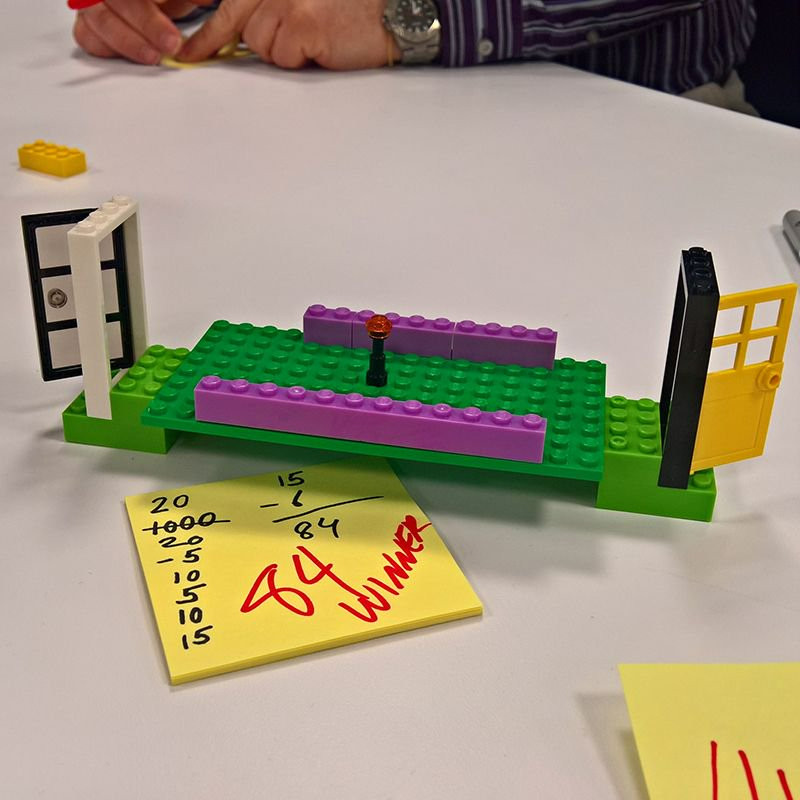
If you wondering what do the above Lego blocks have to do with product management, this was a bridge built for a ficticious client with only very basic information. It was a challenge I was part of at a Virginia ProductTank meeting. The whole process with requirements and tradeoffs we needed to make, felt just as real as when I was building a diagnostic assay or reference materials. The product needs to be something that fills a gap in the market and the customers will use.
 Caruso International
Leave a comment